
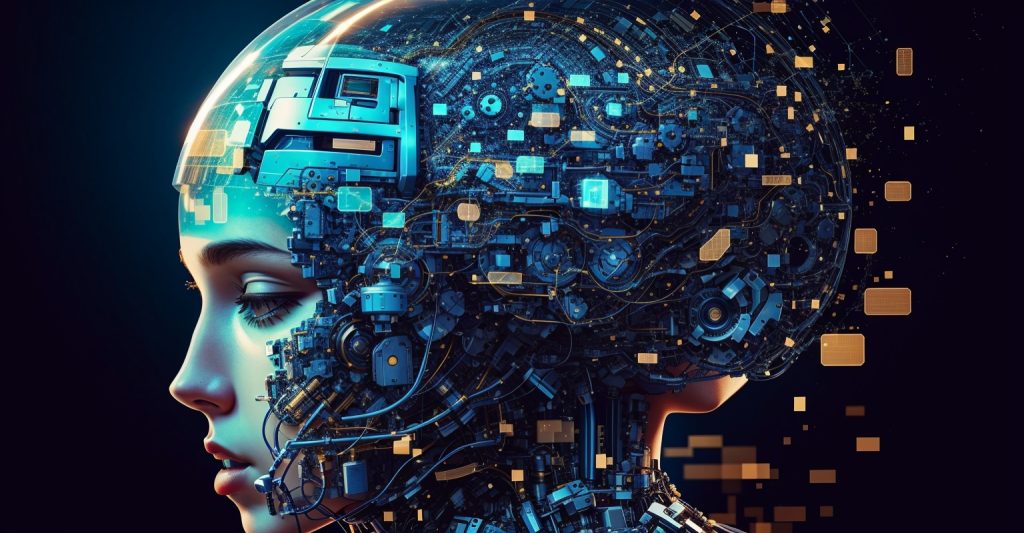
Artificial Intelligence (AI) and Machine Learning (ML) are revolutionizing numerous industries, and staying informed about the latest trends is crucial for businesses seeking to harness their power. In this article, we’ll delve into the cutting-edge developments in AI and ML that are shaping the future of technology.
- Deep Learning: These algorithms are gaining prominence, enabling machines to analyze complex patterns and make autonomous decisions.
- Explainable Systems: As models become more advanced, the need for transparency arises. This field aims to provide insights into how a decision was made, building trust.
- Edge Computing: This is emerging as a game-changer for AI applications. By processing data locally on devices, it reduces latency and enhances privacy.
- Federated Learning: This allows multiple devices to collaboratively train models while keeping user data decentralized.
- Healthcare Innovation: The medical industry is experiencing a significant transformation due to AI and Machine Learning. From diagnosing diseases to drug discovery, these technologies are saving lives.
- Natural Language Processing: This field has made remarkable progress in enabling machines to understand and respond to human language.
- Robotics and Automation: Intelligent robots are automating tasks in various industries, enhancing productivity and efficiency.
- Reinforcement Learning: This technique enables agents to learn and improve their decision-making through interactions with their environment.
- Predictive Analytics: Modern algorithms are revolutionizing how businesses make data-driven decisions by forecasting market dynamics.
- Cybersecurity: With rising threats, Machine Learning plays a critical role in detecting anomalies and preventing data breaches in real-time.
Expanding the Impact of AI and Machine Learning
The growth of smart technology is no longer just about faster computers. It is about how these systems blend into our lives to solve real-world problems. As we look past the basics, several new areas are changing how we interact with the digital world.
Creative Tools and New Possibilities
One of the most exciting shifts is happening in the arts. New software can now help people write stories, create images, or even make music. This does not mean computers are replacing human artists. Instead, they act as a “smart partner.” For example, a designer can use a program to quickly try out a hundred different looks for a logo. They can then pick the best one and add their own special touch. This saves many hours of work and lets people focus on big ideas rather than small, repetitive tasks.
Understanding Human Feelings
Experts are also working hard to make technology feel more “human.” In the past, talking to a computer felt stiff and robotic. Today, systems are learning to sense how we feel. By watching a person’s face or listening to the sound of their voice, a program can tell if a user is happy, sad, or confused. This is becoming very helpful in several areas:
- Service: Digital assistants can be more patient and kind when they notice a customer is frustrated.
- Learning: School programs can see when a student is struggling and offer extra tips before the student gets discouraged.
- Safety: Modern cars can tell if a driver is getting sleepy and give a loud warning to prevent a crash.
Protecting the Planet
Running large data centers uses a lot of electricity. Because of this, “Green Tech” has become a major goal. Scientists are finding ways to get the same smart results while using much less power. By writing better code and using more efficient hardware, companies can save money and help the environment at the same time. Some of these tools are even used to track climate change or find better ways to recycle plastic, proving that high-tech tools can be a force for good in nature.
To order our software development and system administration services, please visit our contact page.