
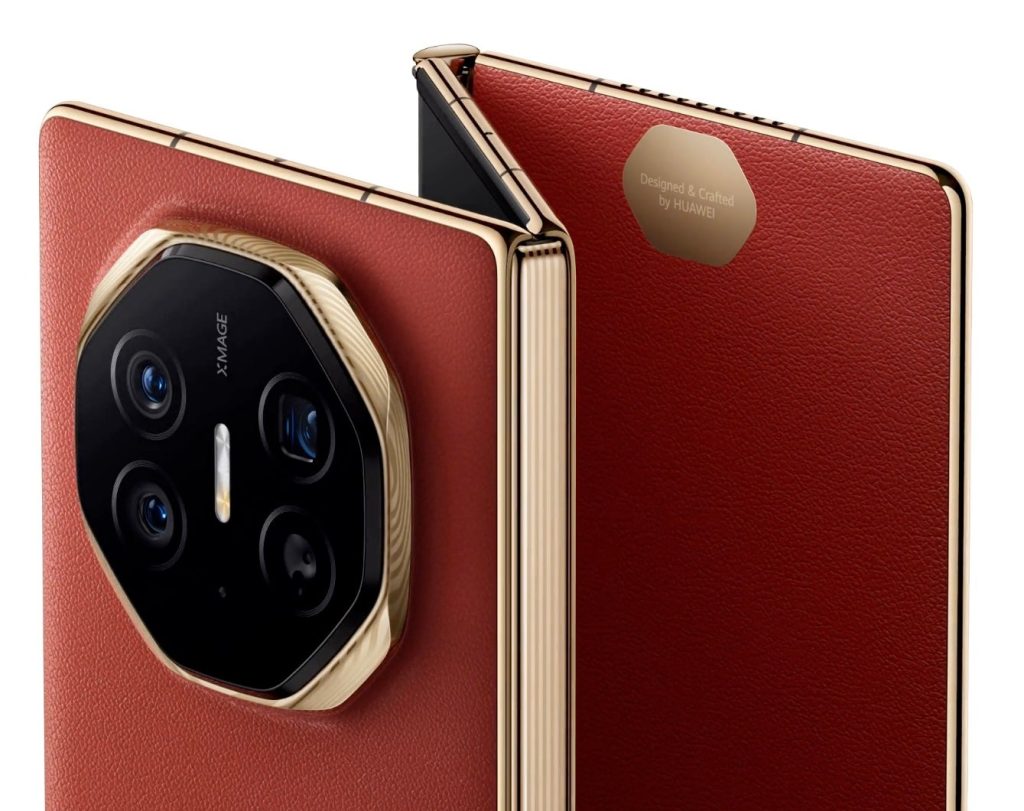
Huawei just launched its luxury foldable phone, the Mate XT, on February 18 in Malaysia. The device features three panels and costs $3,662. Unfortunately, it’s not available directly from U.S. carriers and won’t connect to U.S. networks due to a ban on Huawei products, but there are some workarounds to access a 4G connection in the U.S.
At the launch event, Huawei also introduced the MatePad Pro tablet and Free Arc earbuds.
The design of the Mate XT is striking. It represents a new direction in smartphone form factors, offering three foldable screens. With a sizeable 10.2-inch display and measuring just 0.14 inches thick, it stands out in a market where many brands offer clamshell designs – except for Apple. This phone can be configured in single, dual, or triple-screen formats, and when fully opened, it transforms into a tablet-like device.
While Huawei hasn’t shared the complete hardware specs, some reports suggest it features the Kirin 9010 chip and runs on HarmonyOS 4.2. The steel hinges include a sliding track on the inward hinge and a complex structure on the outer hinge, with 26 cams to facilitate smooth movement.
The phone’s slim profile also comes from its thin 5,600mAh battery, which is just about 1.9 mm thick.
Despite facing limitations due to international restrictions, Huawei continues to push its products globally. The U.S. ban has limited its access to chips, as global suppliers can’t incorporate U.S. technology in their designs for Huawei. Additionally, Google apps aren’t available on Huawei phones in the U.S. The Mate XT was initially released in China last year.
Huawei’s Engineering Marvel or High-End Luxury?
Beyond the foldable mechanics, the internal engineering required to fit three battery cells into a body this thin is a feat of its own. Huawei utilized silicon-carbon technology to achieve a total capacity of 5,600mAh. This choice provides a higher energy density than standard lithium batteries, which is vital for powering a massive 10.2-inch OLED screen without making the device bulky.
Huawei Camera Capabilities
Despite its slim profile, the Mate XT features a high-end camera system. The main module includes a physical variable aperture, allowing users to manually control light and background blur. When the phone is fully unfolded, the giant screen acts as a professional-grade viewfinder, making photo editing much more precise compared to standard smartphones.
Software Adaptability
The software experience on HarmonyOS 4.2 is specifically tuned for this three-panel design. The interface must instantly shift between three states: a standard 6.4-inch phone, a 7.9-inch dual-screen square, and the full 10.2-inch tablet mode. Smart multitasking allows users to run three apps side-by-side, such as a video call, a web browser, and a notes app, making it a true mobile workstation.
Durability Concerns
Reliability remains a major talking point. Because of the “Z-fold” design, one section of the screen is always exposed on the outside when folded. To combat wear, Huawei used a multi-layered composite structure to improve scratch resistance. However, because the technology is so new and the screen is so large, repair costs are expected to be very high—sometimes reaching nearly half the price of the phone itself.
The Global Impact of Huawei
The release of the Mate XT puts significant pressure on competitors like Samsung and Google. While many brands are perfecting the “Book” style fold, Huawei has moved a generation ahead by adding a third panel. Even without 5G or Google services in many Western markets, the device serves as a status symbol and a proof of concept. It shows that despite international trade restrictions, the company is still capable of leading the world in hardware innovation.
To order our software development and system administration services, please visit our contact page.